TPL_YOOTHEME_SKIP_TO_MAIN_CONTENT
Women in small-scale fisheries at Charity Fish Processing group in Mwanza, Tanzania

Promoting An Enabling Environment for Women Networks on Sustainable Small-Scale Fisheries in Nile Upstream - Lake Victoria, Tanzania

The process has strengthened Tanzania Women Fish Workers Association (TAWFA)'s capacity through the provision of leadership training for its members, their capacity and commitment to engage in co-management systems that improve conservation outcomes, climate adaptation measures, and enhanced food security; and conducting elections of leaders from the districts.
In the years 2021 and 2022, the Environmental Management and Economic Development Organization (EMEDO) - a member of the Tanzania Nile Discourse Forum (TNDF) conducted a study on Women’s Role, Struggles and Strategies across the Fisheries Value Chain in the Lake Victoria—Tanzania. The study was prioritized through research conducted by Ministry of Livestock and Fisheries in 2020. In the Tanzania side of Lake Victoria, the current fish production figure is around 422,859.78 metric tons per year, with approximately 95 percent of fish sourced from small-scale fisheries and the remaining 5 percent from large-scale commercial fishing. The sector employs more than 4.5 million Tanzanians who engage in earning their livelihood from fish and related fish products. Women constitute a significantly big number of small-scale fisherfolk, which means it is a self-employed job and provides direct food security, nutrition and other multiplier effect to the community. Therefore, Tanzanian women have a big role in the fishing sector; and this prompted EMEDO to conduct the study on “Women’s role, struggles and strategies across the Fisheries Value Chain in Lake Victoria -Tanzania”, with the aim to understand the challenges, opportunities and other important spheres that surrounds them as women in fisheries.

The Study Objectives Were:

  1. To empower small-scale fisheries communities with a view to contribute to more sustainable and climate resilient livelihoods and food systems.
  2. To stir the implementation of FAO Voluntary guidelines for securing sustainable Small-scale Fisheries in the context of food security and poverty alleviation (SSF guidelines), and to appreciate the need for empowering women in the sector;
  3. To promote dialogue and collaboration between and among small-scale artisanal fishers, fish farmers, fish workers, governments, and other key partners along the value chain; and to further strengthen their capacity to enhance sustainability in fisheries and aquaculture and to enhance their social development and well-being.

Findings From the Study Underlined a Series of Challenges Including:
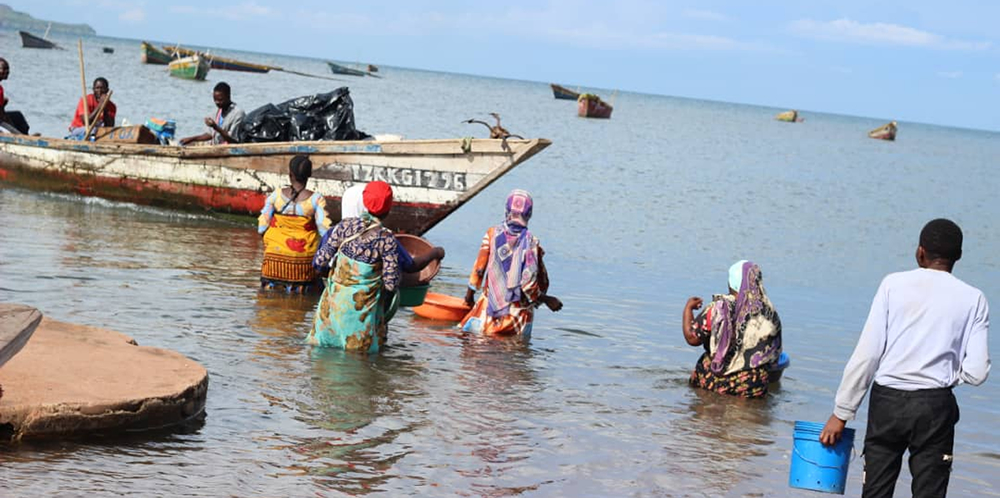
Women wade through water to fish boats to purchase fish for resale - Lake Victoria, Mwanza
Women in Mwanza wade through water to access fish boats to buy fish for resale.
  1. Poor infrastructure at landing sites and insecure fisheries resources which hugely affect women participation as they may not be brave enough to face some challenges as men do
  2. Women face time limitations due to their domestic duties overlapping with their fishing activities
  3. Lack of educational/training opportunities and development programs for women in fisheries unlike men
  4. Lack of access to financing, as many women have no collateral needed to access tangible loans. The interest rates on the loans is also high for the women to afford repayment.
  5. Pressure from the rapidly growing population with increased competition for access to fisheries’ resources
  6. Pressure from market competition and export markets that marginalize women to access the opportunities available in the market
  7. Climate change and other social, cultural, political, economic barriers and poor institutional frameworks.

EMEDO Interventions

The findings stirred the idea to establish a national network of women in fisheries namely Tanzania Women Fish Workers Association (TAWFA) in June 2021. The network has proven to be a safety net for women where they can rely on social capital including networks that increase trust, ability to work together, access to opportunities, membership for women groups in small scale fisheries and resilient approaches to address the adverse impacts of climate change.
EMEDO conducted consultative meetings with Tanzania Women Fish Workers Association (TAWFA) in the Lake-zone regions of Mwanza, Kagera, Mara, Simiyu, and Geita to identify the prevalent opportunities, challenges and disparities; and proposed for scalable solutions that will generate solutions for food security and climate resilience. Through consultations EMEDO engaged with the Ministry of Fisheries and Livestock and Local Government Authorities to raise awareness on the challenges and jointly plan for promoting sustainable outcomes for households including food security.

Significance and Impact of the Interventions
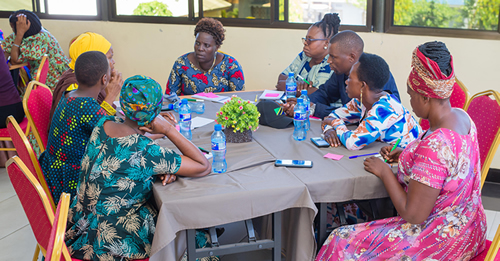
Tanzania Women Fish Workers Association (TAWFA) - Lake Zone at a regional consultative meeting in Mwanza
TAWFA - Lake Zone leaders at a regional consultative meeting in Mwanza
The process has strengthened TAWFA’s capacity through the provision of leadership training for its members, their capacity and commitment to engage in co-management systems that improve conservation outcomes, climate adaptation measures, and enhanced food security; and conducting elections of leaders from the districts.
Regional and zonal level leaders who are focal representatives of the network have promoted the women’s bargaining power, as network members are now informed of the market across the regions.
TNDF has been contributing towards facilitation of capacity strengthening in TAWFA interventions through its member - EMEDO. In this particular project, TNDF is using its vast experience in network formation to support TAWFA. TNDF continues to participate in TAWFA stakeholder forums for knowledge sharing, expertise and visibility.
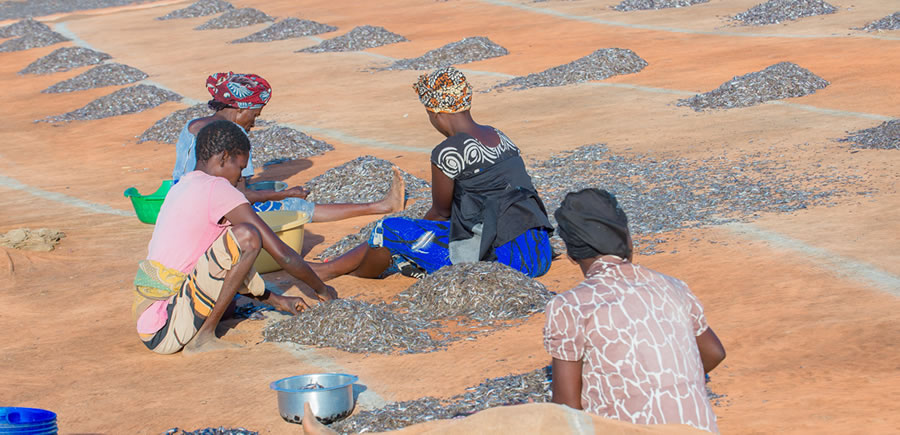

Women sorting small sardines/dagaa at Busekela landing site in Musoma, Tanzania



AMEDO Logo
Environmental Management and Economic Development Organization (EMEDO) is a non -profit organization established in 2005. EMEDO is a member of the Tanzania Nile Discourse Forum (TNDF) and is based in Mwanza Region on the shores of Lake Victoria. EMEDO aims to reach out, listen and encourage voices, and advocate for needs of rural communities. The organization has grown organically in direct response to lessons learnt along the way, grounded in the conviction that real and lasting change depends on commitment, ownership and self-reflection. EMEDO’s main activities focus on enhancing capacities of community groups to effectively mobilise, having their voices heard, rights recognized and respected, and to influence local, national and international policies that affect their rights of access, use and control of natural resources for improved livelihoods. EMEDO operates under 3 thematic areas which are; Sustainable Fisheries Management; Water Sanitation and Hygiene, and Environmental Management.
Author:
Lucyphine Kilanga,
Project Officer , EMEDO
Tanzania Nile Discourse Forum

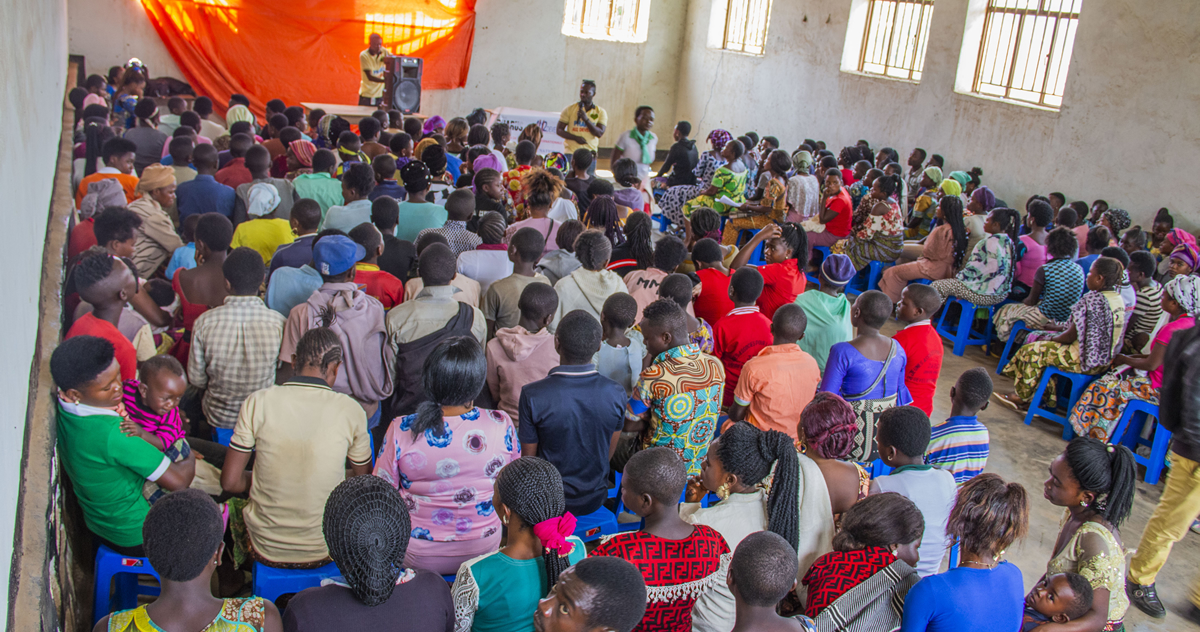
Participants at the International Women’s Day Celebration event - mainly idle teens, young mothers, and ex combatants; majority of whom are currently enrolled for skills training with ACPDI

Celebrating International Women’s Day: Highlight the plight of the marginalized, idle teens, and young mothers in the North Kivu province of DRC

The need for supervision of young/teen mothers and idle girls remains enormous in the Congolese Nile basin region. The dire need is a direct consequence of the security situation that’s hindering the socio-economic development of young people, most of whom are illiterate, unemployed and significantly marginalized.
World over, civil society plays key role in the advocacy for social - economic development of marginalised communities. In observation of the International Women’s Day 2023, the CSOs of North Kivu Province of DRC with the leadership of Action des Communautés Payssanne pour le Developement Integré (ACPDI) (Action of Peasant Communities for Integrated Development) ceased opportunity of the day to bring together and highlight the plight of marginalised idle teens, and young mothers within the region.

ACPDI is a local NGO and a member of Nile Basin Discourse subscribing through the DRC Nile Discourse Forum. ACPDI is implementing a support project for the Socio-Economic Reintegration of Marginalized and Unemployed Young People as a measure to promote peace in the health area of Ngeleza, Territory of Lubero, North Kivu province in the DRC.   The project covers 14 villages including BUNDO, KYAVIRIMU, KIRUNGU, KYANGIMBA, KIRIMBUNDA, VUVANDE, MUHIMBIRA, VULEKYA, KINYE, LUBWE, KINYATSI, MAHAMBA, MUMBO, MWISE, all together with an estimated population of 11,353 inhabitants from 1,793 households (averaging to 6 people per household); with about 1,567 marginalized and unemployed young people - including 545 teenage single mothers with 708 children under their care; 522 young idle girls, 477 idle boys and 14 ex-combatants.   The 1,567 unemployed and marginalized young people represents 13.8% of the total population of 14 villages in the health area, while ignoring the 708 dependent children of child mothers/girls who give birth early.

The project includes a literacy class, currently with 400 learners distributed in the three training centres including the:  Lubwe/Mihake center with 120 learners among whom 50 are young/teenage mothers, 45 idle girls, 20 idle boys and 5 ex-combatants;  Ngeleza/Katalio center with 142 learners including 51 young mothers, 64 idle girls, 23 idle boys and 4 ex-combatants; and Kirungu Centre with 138 learners including 48 young mothers, 60 idle girls, 25 idle boys and 5 ex-combatants.

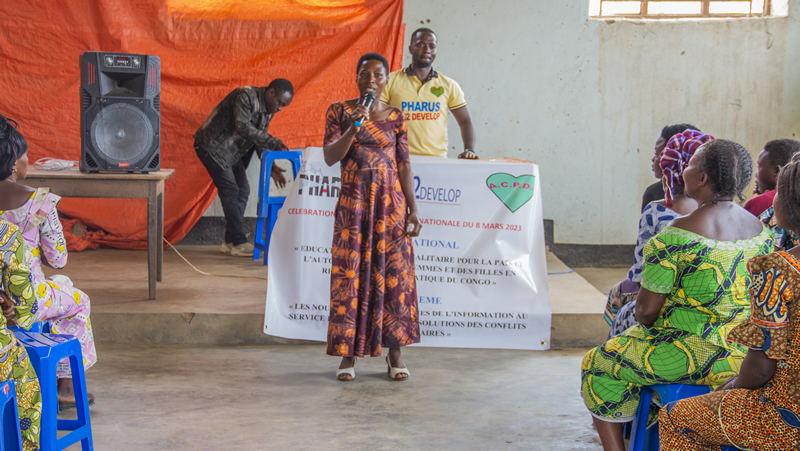
The event for the celebration of the International Women’s Day of March 8th was held at KIMWANA-KAWA hall in Mihake under the national theme "Egalitarian digital education for peace and the empowerment of women and girls in the Democratic Republic of Congo”, with a participation of over 561 young people majority being female totalling to 397.

Given the socio-security situation, a sub-theme/provincial theme was set up and focused on the subject of education "Information technologies for promotion of peace and resolution of community conflicts".
 During the event, participants were taught the importance of planting fruit trees to fhttps://nilebasindiscourse.org/administrator/index.php?option=com_content&view=article&layout=edit&id=454#ight against global warming and malnutrition in families since most of them were young/teen mothers.
This was followed by a debate based on the localised theme of the day “Information technologies for promotion of peace and resolution of community conflicts”; characterised with questions and answers that edified the participants’ intake of knowledge.

Participants were also taught on how women can rationally use new information technologies to build lasting peace in DRC and also advocate for egalitarian digital education throughout the community.

Sensitizing themes were presented on the fight against discrimination of women and girls in education so that they can actively and equally participate in the development of DRC, Africa and the World in General. Participants were also treated to a comedy show to firmly establish the days’ theme through humour.

A facilitator from the Union of Women Teachers in the Ngeleza health area gives her remarks on the theme
A facilitator from the Union of Women Teachers in the Ngeleza health area gives her
remarks on the theme "Egalitarian digital education for peace and the empowerment of
women and girls in DRC"
The hosts of the event saw to it that majority of the presenters and facilitators on the event are women and youth; to serve as an example and inspiration to the young girls; that they can also become responsible people and contribute to the development of their communities.

The event was a success; it reached out to many young people especially girls. The main topics of discussion including planting fruit trees for the fight against global warming and malnutrition, egalitarian digital education for peace and the empowerment of women and girls in the Democratic Republic of Congo, and new information technologies at the service of peace and the resolution of community conflicts were timely topics that truly added on the knowledge of those that attended the event.
The need for supervision of young/teen mothers and idle girls remains enormous in the Congolese Nile basin region. The dire need is a direct consequence of the security situation that’s hindering the socio-economic development of young people, most of whom are illiterate, unemployed and significantly marginalized.


About ACPDI

Created in 2005, the NGO “Action des Communautés Payssanne pour le Developpement Integré” (Action of Peasant Communities for integrated development) aims to contribute to the socio-economic promotion of the peasant community. ACPDI a full member of the DRC Nile Discourse Forum and exists to campaign for the well-being of peasants through Food Security and Nutritional Promotion, Rehabilitation of Road Infrastructure, Social Protection and Promotion of Peace, Health, Water, Hygiene and sanitation; Environmental protection and humanitarian assistance. It is located in Butembo city, Vutetse Quarter, 67 Visogho Cell, Democratic Republic of Congo.

Among other programmes, ACPDI works to promote gender through the sensitization of young mothers and idle daughters on the themes of promoting peace, the fight against global warming and skilling youths in making crafts for economic independence.
The massive participation of young mothers, idle girls, idle boys, and some ex-combatants during the event
The massive participation of young mothers, idle teens, and some ex-combatants during the event.
Author:
Assingya Victor,
National Technical Support Expert - DRC NDF