Civil Society Targeting Smallholder Farmers and Climate Smart Agriculture to Enhance Climate Change Action
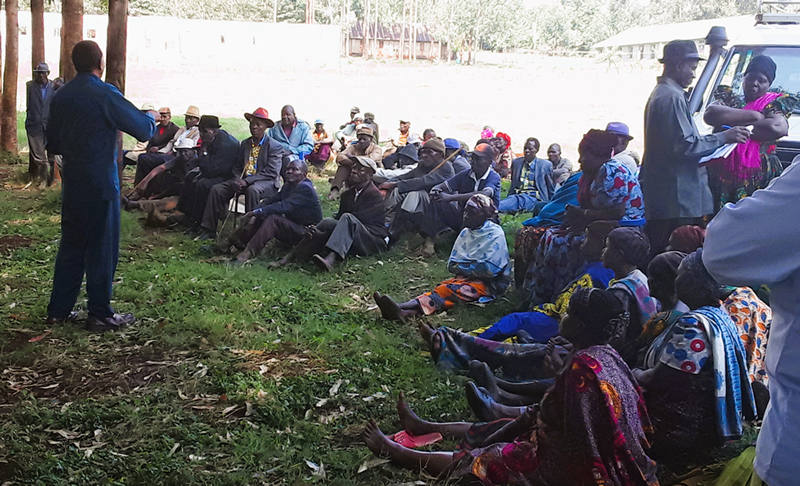
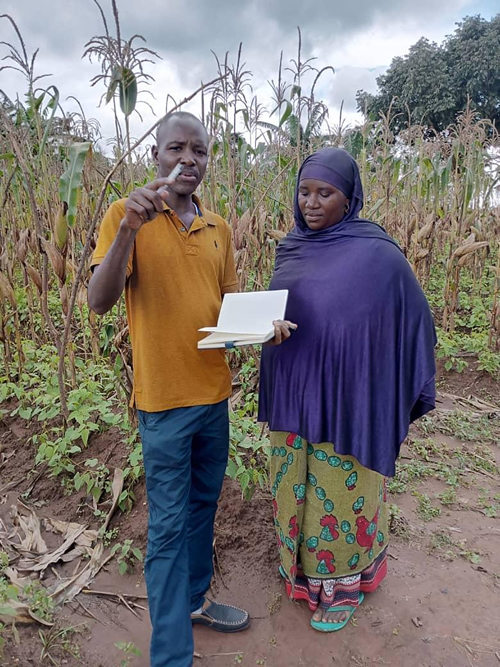
Uganda Nile Discourse Forum (UNDF) held strategic community dialogues on Climate Smart Agriculture with its member farmers. The dialogues aimed at promoting Climate change responsive agriculture as means to building resilience of communities and combatting adverse effects of climate change including: drought, flooding, famine, displacement among other challenges. The dialogue made strong recommendations from the grassroots communities; working on the outcomes of the dialogue, UNDF has embarked on supporting farmers to build associations/cooperatives with a goal to increase farmers’ resilience to climate change, and improvement of their agricultural produce volumes and quality.
In June 2023, UNDF organized community dialogues of Climate Smart Agriculture with its member farmers, The dialogues aimed at promoting climate smart agriculture: working towards building the resilience of communities and combatting effects of drought, flooding and other climate change challenges.
Participants acquired knowledge on sustainable adaptation measures that can build resilience to the adverse effects of climate change. These measures include: tree planting, mulching, soil and water conservation measures, planting crop varieties that are quick maturing and drought resistant, pests and disease resistance and control measures, use of appropriate low-cost irrigation methods and water harvesting, control of wetlands encroachment, use of alternative energy sources other than firewood, reduction in use of inorganic fertilizers/herbicides/pesticides, separation of bio-degradable and non-biodegradable materials among others. The dialogue was attended by over 50 mainly women and youth from the community, Agri-entrepreneurs, and dealers in the agricultural chain inputs and services.
Participants acquired knowledge on sustainable adaptation measures that can build resilience to the adverse effects of climate change. These measures include: tree planting, mulching, soil and water conservation measures, planting crop varieties that are quick maturing and drought resistant, pests and disease resistance and control measures, use of appropriate low-cost irrigation methods and water harvesting, control of wetlands encroachment, use of alternative energy sources other than firewood, reduction in use of inorganic fertilizers/herbicides/pesticides, separation of bio-degradable and non-biodegradable materials among others. The dialogue was attended by over 50 mainly women and youth from the community, Agri-entrepreneurs, and dealers in the agricultural chain inputs and services.
Key Highlights presented at the dialogue:
Agriculture is the back bone of the Uganda’s economy and thus contributes the biggest part of the country’s GDP. The sector supports millions of livelihoods and employs 70% of the working population of whom 71% are women. It provides raw materials for non-agricultural sectors. The sector accounted for 20% of GDP in the fiscal year 2017/2018 and 43% of export earnings. Coffee is the main cash crop that contributes 19% of the country’s export and the Government has planned to increase production to 1.33 million tonnes of processed coffee by 2020 (Ministry Agriculture Animal Industry and Fisheries Report – 2018). Increase in agricultural production and productivity leads to increase in the income of the rural population. This makes agriculture an entry point for poverty eradication across the country.Agriculture’s contribution to GDP according to Uganda bureau of statistics (UBOS) dropped to 21% in the 2017/18 financial year compared to 21.5% in 2016/17. The drop has been consistent and is reflected in the other financial years. According to the report Uganda is highly vulnerable to climate change which not only affected agricultural output but has long term effects such as entrenching poverty especially among the rural communities.
The poverty level has increased from 19.7 % to 21.4 percent meaning 8 million persons are below the poverty line – hardly earning $1 USD in a day (Uganda Bureau of Statistics - Uganda National Household Survey (UBOS – UNHS 2019)). Uganda has also recorded the highest youth unemployment rate in Sub -Sahara Africa. Highest poverty levels are still recorded in the rural areas across the country.
Up to 80% of the poorest Ugandans live in rural areas and they are a prime target of government development efforts. These rural communities are up to 90% smallholder farmers; growing a few crops and rearing a few animals on approximately 2.5acre pieces of land and mostly producing for home consumption (New vision report dated 23rd Feb 2010 http://www.newvision.co.ug).
The recent low production and productivity growth in the agricultural sector has been mainly attributed to the adverse effects of climate change coupled with challenges of high costs of inputs, slow technological innovations and adoption - particularly amongst women farmers being the majority labour force; poor production techniques; declining soil health; poor management of pests and diseases; limited access to land and agricultural finance; a weak agricultural extension system that is limiting access to relevant information with access to extension services lowest among women; over dependency on rain-fed agriculture as well as limited market access. Uganda has more than 75% of its total land as arable land but the country’s agricultural industry is characterized by poor and inappropriate management practices. This is as a result of soil mineral extraction, structural degradation and soil erosion.
The negative effects of climate change - notably prolonged dry spells, flooding and severe storms - have exacerbated the challenging conditions. The farming communities basically rely on rain-fed conditions without irrigation. The transportation of agricultural produce from the areas of production to the final markets is hindered by the poor road network especially during the rainy seasons thus reducing profit margins.
The overall objective of the agriculture sector in the current National Strategic Plan is to improve household food security and income while conserving the environment. It aims to improve Biological and Economic Productivity of Crops and Livestock, strengthen farmers and community organizations, improve marketing and Value Addition, and improve resilience and mitigation to climate change effects. In order to achieve these interventions therefore, government has taken some initiatives including Operation Wealth Creation (OWC) and National Agricultural Advisory Services (NAADS) programs that are intended to provide extension services to farmers in terms of knowledge and quality farm inputs. The NAADS program is farmer-driven and farmers are represented at the sub-county by secretaries for production. The secretaries for production at the sub-counties are elected by farmers at grassroots to represent them at the sub-county executive committee. Farmers at the grassroots are targeted for the program to enable them articulate their roles better and demand for quality service provision.
To ensure sustainable natural resource management, the government through the ministry of water and environment has instituted the National Environment management Authority (NEMA) tasked with the protection of the environment and making the Environment impact Assessment (EIA). NEMA collaborates with the environment offices at national, district and sub-county levels to effectively carry out its duties.
Unfortunately, the success of the government schemes has been low. The major constraint is the inadequate resources to extension workers and mixing politics with development work. The Government of Uganda had planned to recruit 5000 extension workers across the country by 2019 but only 3800 were recruited. The deployed extension workers reach out to farmers at ratio of 1800 households per extension worker (Uganda Media Cetre - www.mediacentre.go.ug, 5th March 2019). But the internationally accepted level is 500 households per extension worker. This leaves a huge knowledge and service delivery gap.
Besides the government schemes, Uganda also supports various development interventions initiated by other development partners which are aimed at improving the living conditions of the communities. The government gives priority to development programs that are geared towards poverty eradication and sustainable livelihoods.
Discussion and conclusions raised by participants
.
- Participants raised the importance of getting climate change facts and figures as the sure way to inform decision making and action. Often times, there are misconceptions, myths and lies about climate change that need to be put straight. They were thus grateful for the gesture raised by the UNDF and called for many more such opportunities for learning.
- Farmers present highlighted the importance of modern and affordable smart agricultural practices calling on the UNDF leadership to enlighten them more on cheaper but sustainable means of production.
- Irrigation agriculture was a priority method that is becoming inevitable due to the irregular rainfall seasons and therefore there’s need to find affordable irrigation infrastructure for farmers.
- Participants were concerned about the high cost of value addition and packaging for farm products. They thought it important to urge government and other decision makers to make this more accessible and affordable to farmers.
- Farmers present resolved to form or join already existing farmer groups, cooperatives and SACCOS in order to tap into existing resources that the government is investing at Parish level.
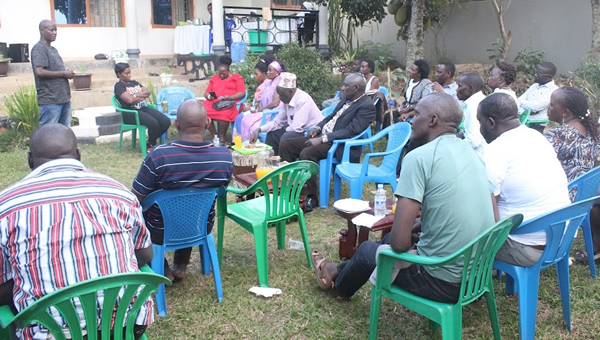
- The procedure of family hosted meetings was encouraged especially now that resources are scarce to hold meetings in hotels and public places. Members were encouraged to invite others for such productive gatherings.
Actions beyond the dialogue
Subsistence communities represent the poorest in Uganda, but they are also the most vulnerable to climate change and other challenges that lead to losses in farming. These communities need to be helped to explore the untapped opportunities in better land-use practices, and also get encouraged to form/join smallholder farmer institutions to build their capacity. This is a direct call to institutions like the UNDF to undertake farmers’ empowerment through increasing their capacity to organize themselves into strong farmer association /cooperatives to enhance their lobbying and marketing capacity.
To this end, UNDF has embarked on building farmer associations/cooperatives that will increase agricultural produce volumes and improve quality. This will be made possible through collective marketing and putting in place quality controls to increase volumes that will result into better prices.
Author:
Mulumba Mathias Suuna,
National Technical Expert, Uganda Nile Discourse Forum (UNDF)
Mulumba Mathias Suuna,
National Technical Expert, Uganda Nile Discourse Forum (UNDF)