TPL_YOOTHEME_SKIP_TO_MAIN_CONTENT
Participants of the Consultation workshop in Addis Ababa - Ethiopia, May 2023

Climate Displacement in Africa; Regional Consultations

Over the course of two days, a number of outcomes were approved, including the development of a brief concept paper, which highlights opportunities for identifying responses in coherent and adequately funded Africa, based on human rights, gender, and climate justice. Civil society organizations are to use the paper for advocacy at both national and regional levels.
The cases of climate displacement are increasing due to the impacts of climate change, requiring action to support communities and people at risk and to provide practical solutions that create opportunities for safe migration. A wide range of potential responses to climate-related human mobility are required, including legal and institutional policy reforms, as well as practical support mechanisms, before, during and after migration and displacement resulting from climate change. These solutions ought to guarantee human rights, and preserve the dignity and safety of affected persons, whether they are displaced persons or migrants within areas at risk, while addressing movement within and across borders.

Within the framework of the global call to address issues related to human rights and protection gaps in the context of climate and human mobility in 2023, the Climate Migration and Displacement Platform (CMDP) and the ACT Alliance, in cooperation with the German Friedrich Ebert Foundation, organized a series of national and regional activities related to human rights and justice, in response to the effects of climate change on displacement and migration, where a series of regional consultations are being organized with civil society organizations in Latin America, Asia, the Pacific, and Africa.

These consultations aim to develop common understandings of potential current and future trends in climate-induced human mobility, including displacement and migration, and to identify strategies for targeted institutional and structural advocacy engagement. In particular, the consultation seeks to identify ways for civil society organizations to build coordinated national and regional responses to migration as a result of climate change impacts, including through partnerships with grassroots networks and research communities.

The Egypt Nile Discourse Forum (EgNDF) participated in the regional consultative meeting for Africa, which brought together representatives of civil society organizations, researchers, leaders of communities affected by climate change, and activists in the field of climate response and that of protection and defence of migrants' rights.

This meeting is the first step to identifying ways to frame climate-related migration issues in Africa, including possible solutions for policies and practices in the context of human rights, as well as climate programming and advocacy. It also includes a review of existing watch lists for climate-related migration and displacement patterns on the African continent.

The meeting was held in the Ethiopian capital, Addis Ababa, included representatives from Egypt, Morocco, Mali, Malawi, Zimbabwe, Zambia, Kenya, Ethiopia, Somalia, Tanzania, Sierra Leone, Rwanda, Nigeria, Liberia, Gambia and South Africa, discussed: prioritizing goals and strategies to enhance migration advocacy, climate action at the national, regional and global levels, as well as considering ways to enhance civil society collaboration to advance climate change migration solutions.

Over the course of two days, a number of outcomes were approved, including the development of a brief concept paper, which highlights opportunities for identifying responses in coherent and adequately funded Africa, based on human rights, gender, and climate justice. Civil society organizations are to use the paper for advocacy at both national and regional levels.

The meeting also recommended directing civil society organizations and grassroots networks in their exchanges with national and regional decision-makers, which contributes to coordinating messages across various policy sectors and social movements, including messages related to technical support, capacity building and necessary financing, in line with the national priorities of each country.

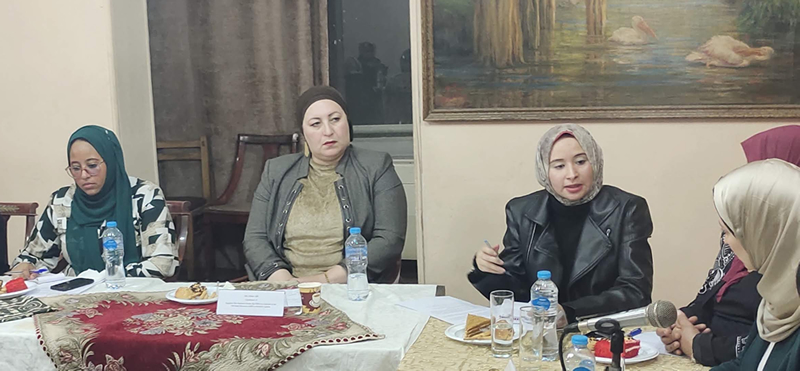
Some of the participants at the seminar that took place in Cairo - Egypt

Women Empowerment in Africa – Egypt Picks Lessons from Tanzania

The symposium discussed several important topics, including the achievements made by Tanzanian women in various economic, social and political fields, and the role of civil society in supporting women, while presenting the challenges that women still face in obtaining equal rights in Tanzania, as well as the role of Tanzanian men in supporting women and girls.
Over the past 75 years, there have been many notable achievements in the field of women's rights since the adoption of the Universal Declaration of Human Rights. Women have influenced the text of the Declaration which has contributed to decisive social changes, and they continue to be at the forefront of social change that enables more people to enjoy their rights. This has turned into positive changes in the lives of women and girls. Today, more women occupy leadership positions, are elected to lead governments, and occupy positions in decision-making structures.

International Women's Day comes annually in each March, to celebrate International Women's Day, in appreciation of their essential role, which represents the cornerstone of the growth and renaissance of their society, especially, African women who have stood exemplary for women in the world over the past years, through serious steps taken by many African governments in the field of empowering women and breaking barriers.

In Tanzania, for example, since independence, the government has taken real steps to empower women, which has now made it a model for empowering African women, and the authorities in eastern Africa to take more effective steps to further close gender gaps.

In this context, Egypt National Nile Discourse Forum (EgNDF) collaborated with the African Centre for Research and Strategic Studies in Cairo and organized an interactive seminar entitled "Women Empowerment in Africa... Tanzania as a Model" in celebration of the International Women's Day, in partnership with the Tanzanian Student Union and the Tanzanian community in Egypt, under the auspices and in the presence of representatives of the Embassy of Tanzania in Cairo.

The symposium discussed several important topics, including the achievements made by Tanzanian women in various economic, social and political fields, and the role of civil society in supporting women, while presenting the challenges that women still face in obtaining equal rights in Tanzania, as well as the role of Tanzanian men in supporting women and girls.

In her speech at the opening session, Dr. Ghada Fouad, head of the African Centre for Research and Strategic Studies, and a member of the Egypt National Nile Women Network, explained that Tanzania was among the countries to seek women empowerment, and was among the first African countries to propose allocation of a women’s quota in its Parliament; a move that fostered the rise of women like Mrs. Samia Hassan the president of the Republic of Tanzania today.

NBD's Elham Afifi, Second (2nd) from Left attending the Seminar
NBD's Elham Afifi, Second (2nd) from Left attending the Seminar.
Dr Siham Jibril, Chair of the Provincial Committee of the National Women Council, expressed her happiness with what she heard of the efforts to empower African women and explained that the problems and challenges facing Tanzania are shared by almost all countries of the continent. She also presented the efforts of the National Council for Women towards empowering Egyptian women and putting them on the right path to participate in the development Of the country.

Elham Afifi, the National Coordinator of the EgNDF shared about the Nile Basin Discourse (NBD) and its gender strategy that focuses on empowering women in managing water resources, and the formation of the Regional Nile Women Network to help achieve this purpose. She also spoke about the activities of the EgNDF at both national and regional level.

The workshop concluded with a set of interventions and recommendations on the need for economic empowerment of female breadwinners in Tanzania, equality in employment opportunities and salary rates between men and women, prevention of early marriage that cause early divorce, access to study and use of technology for Tanzanian women, increasing women's representation in parliament, and equal access to health services, and increase in staff and equipment in hospitals and health facilities in villages.


Author:
Elham Afify, National Technical Support Expert - Egypt


Some of the plant species with potential to repel mosquitos (Left to Right): Nasturtium (Tropaeolum majus), Cymbopogon citratus (Lemon Grass), and Tarragon (Artemisia dracunculus)

Ethnobotanical Survey of Plant Species Used as Mosquito Repellents in Controlling Health Challenges Caused by Floods

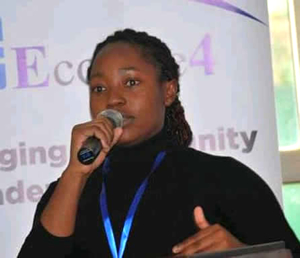
Uganda is experiencing adverse effects of climate change including more frequent floods in many parts of the country. The flood grounds are a perfect breeding ground for mosquitoes, which transmits malaria and other diseases that has adversely affected Ugandans in recent times. Rose Nakanwagi - a Uganda Nile Discourse Forum(NDF) Youth Champion on malaria control accomplished a community-based study on drought resistant plants that are also mosquito repellent in Greater Masaka using community science.
Uganda is experiencing adverse effects of climate change including more frequent floods in many parts of the country. These floods are a perfect breeding ground for mosquitoes, which transmit malaria and other diseases that have severely affected Ugandans in recent times.

The natural events of flooding cannot be prevented but their impact can be mitigated. Emphasis has been shifted from disaster response to risk management, including the improvement of flood forecasting and warning systems with the addition of health protection during response and recovery phases. The Uganda Ministry of Health and the Civil Society Coalition Against Malaria (UCAAM) - a member organisation of the UNDF have taken keen interest in alternative means for controlling/preventing malaria using natural repellent plant species.     It has however been noted that although the use of medicinal plants in Uganda/Africa has been in existence for thousands of years, there is not much documentation. As a result, the pharmacopoeias are in people’s minds and the knowledge is only passed orally (Kokwaro, 1995). Thus, the efforts to research on the plants presents one of the maiden studies by a UNDF Climate Change Resilience Youth Champion Rose Nakanwagi. The study was conducted in Masaka district located in the Central region of Uganda. Plants were collected and transferred to Makerere University at the Department of Plant Science, Microbiology & Biotechnology. A total of 150 respondents including village elderly men and women, and herbalists were selected for the study.

Overall, the research project’s intent was to document and preserve indigenous knowledge about drought resistant plant species used to repel mosquitoes in Masaka District pursuant to a future research and development of standardized bio-pesticides.


Brief Findings on Plant species used to repel mosquitoes

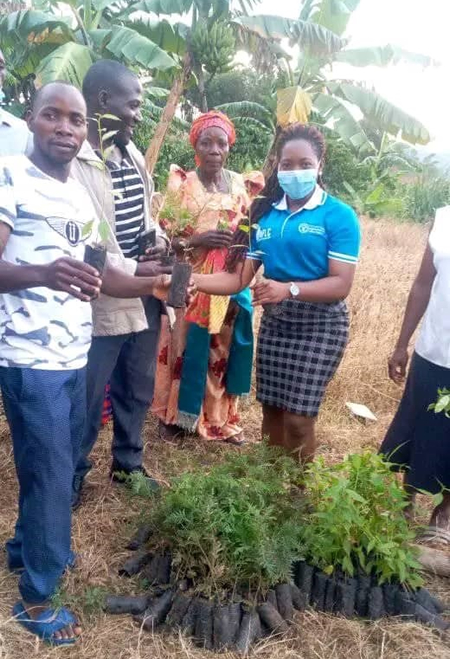
Community engagement to scale-up planting of mosquito repellent plants
Engaging the community to scale-up planting of
mosquito repellent plants
Malaria and flooding cannot be separated. When floods are receding, floodwater creates stagnant pools that not only provide a perfect breeding ground for mosquitoes that transmit malaria but also increase the chances of spreading waterborne diseases, such as hepatitis A and cholera.

Despite decades of malaria control efforts, malaria and other mosquito-transmitted diseases remain the major cause of maternal death and of children under five years of age worldwide. It is estimated that malaria causes between 1.5 to 3.0 million deaths per year in the tropical and subtropical areas (Kweka et al., 2008). Uganda ranks fourth among the highest malaria burdened countries in Africa according to the World Health Organization (WHO, 2020). An estimated 8 to 13 million cases occur per year and account for approximately 30% to 50% of outpatient care, 15% to 20% of health facility admissions, and 9% to 14% of inpatient deaths in the country (Musoke et al., 2015).

Over 80 plant species were reported being used in Uganda as either herbal remedies against malaria or repellents to mosquitos (Adia et al., 2014). World Health Organization recommended use of different parts of locally available plants and their products to repel mosquitoes such as Cymbopogon citratus (Lemon grass), Rosmarinus officinalis (Rosemary), Eucalyptus globulus (Eucalyptus) and others. The insecticidal property of Cymbopogon citratus (Lemon) is credited to various bioactive cyclic and acyclic terpenes present in its oils for controlling mosquito larvae (Ojewuni et al., 2017).

Plants such as Mentha spicata, Eucalyptus globulus, are a valuable source of bioactive compounds which include essential oils (Giacometti et al., 2018). Leaves constitute the main part used in the control of malaria (Stangeland et al., 2011). These plants are potential sources for the development of novel and more potent antimalarial drugs and insecticides. However, further studies should be undertaken to validate their efficacy and safety, and to standardize practice.


Recommendations for UNDF/NBD Family

  1. This study is an eye opener to the Nile basin family on the importance of community level research in specifically enhancing the use of environmental indigenous knowledge to solve health related and other challenges Nile communities face. The UNDF is taking this further with the MOH and UCAAM to plan for more such studies in different flood prone areas of Uganda.
  2. The findings indicate that 40% of the 132 respondents were not aware of the factors leading to breeding/multiplication of mosquitoes in Masaka district. This is a great finding to inform programming of the NDFs as far as their cardinal role of sensitizing communities is concerned. It is assumed that communities know some of this basic information but equally surprising through this evidence that they don’t. UNDF therefore plans to provide sensitization and training, prioritizing women and youth climate resilience champions to ensure communities have these basic facts at their fingertips.
  3. UNDF will use this study as evidence to complement its workplan generated during recent events, trainings and structure set-up like the Nile Women Network, Youth and Women Climate Resilience Champions and Regional Cities Projects. Plans are under way to engage Rotary and Rotaract Clubs within their Greening project to prioritize repellent plants, draw a pilot plan with stakeholders on promoting repellent plants at city level, malaria support partners to provide initial support for opening up a demonstration nursery regionally among other innovations.
  4. Promoting repellent plants is not a stand-alone initiative, it has several community benefits. There are several plants traditionally used for different purposes including repelling different types of insects, these plants may vary from region to region. All of these plants will add beauty to compound gardens, used for other medicinal solutions, with some providing additional cooking benefits among thousands of benefits to the ecosystem within the Nile Basin.
  5. Many Repellent plants have also been found to be drought resistant and therefore contributing to NBD’s mandate and one of NCCR’s project outcomes of supporting communities to manage drought. Plants such as Lemon Balm/kiwankulata which is a member of the mint family, also known as horsemint and beebalm is a very easy plant for beginning gardeners to grow - even if you don’t have a green thumb! Lemon Balm is a very hardy plant, it resists drought, and it grows well even in shade. It is a very fast growing and sometimes aggressive plant, so you might want to contain it to a pot, where you can move it to wherever you like to ensure that it doesn’t take over your garden.
  6. According to the study, Malaria has caused high rates of mortality and morbidity among the people of Masaka district and as observed nationally and internationally. It’s mainly due to the high poverty levels, delayed and expensive treatments of the infected individuals thus resulting into economic loss to the country and death of future leaders. Tackling this epidemic has far wider advantages to the livelihoods of the Nile Communities especially women and children.
  7. Plant-based mosquito repellents will be of assistance to individuals who experience side effects associated with antimalarial drugs and the high medical costs. The results of this study lay a backbone for further research and efficacious tests in the development of standardized antimalarial drugs and bio- pesticides that are effective, eco-friendly, easily biodegradable and inexpensive.
Nakanwagi Rose
Nakanwagi Rose is a female Ugandan, a zoology and botany graduate of Makerere University. She teaches Biology & sports science at Kyambogo University. Rose is a FAO Youth Champion in Uganda and a member of Greater Masaka Coffee Farmers' Cooperative Society.
As a botany student, due to the increased resistance of malaria vectors towards drugs in Uganda, she carried out an ethnobotanical survey of plant species used in the control of malaria vectors in Masaka district.

Author:
Nakanwagi Rose,
Climate Change Resilience Champion, Uganda Nile Discourse Forum (UNDF)

Email: This email address is being protected from spambots. You need JavaScript enabled to view it.
Tel: 0774471601 / 0757039300