Empowering Communities, Restoring Forests: SUNARMA's Participatory Forest Management Success in Ethiopia
Published: 31 October 2025
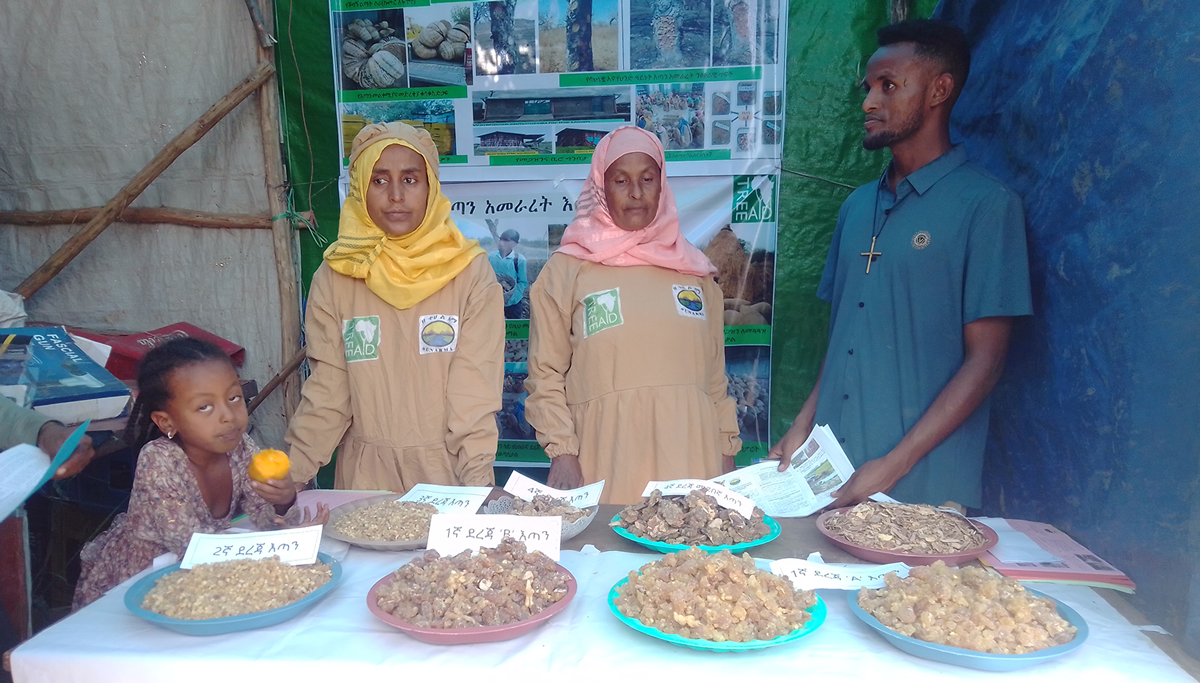
Members of a Participatory Forest Management Cooperative (PFMC) showcase graded frankincense at a trade fair in Metema, Amhara Region.
SUNARMA is restoring degraded dryland forests and transforming rural livelihoods in Ethiopia's Amhara Region. Through participatory forest management, SUNARMA empowers local communities in Metema Woreda to co-manage 37,833 hectares of forest, reduce deforestation, promote equitable benefit-sharing, and enhance household incomes from sustainable forest products; proving that conservation and livelihood improvement can go hand in hand..
Across Ethiopia's northwest lowlands, dry forests once teeming with life have been rapidly disappearing; cleared for agriculture, overgrazed by livestock, and scarred by uncontrolled fires. Yet in Metema Woreda, a remarkable turnaround is underway, led by the Sustainable Natural Resource Management Association (SUNARMA).
Founded in 2000, SUNARMA is one of Ethiopia's leading national NGOs championing sustainable natural resource management. Working hand in hand with rural communities, SUNARMA empowers forest-dependent households, pastoralists, women, youth, and people with disabilities to secure their livelihoods through sustainable practices.
Since December 2022, SUNARMA has been implementing a Participatory Forest Management (PFM) project across 37,833 hectares of dryland forest - directly benefiting over 3,000 households in Metema. The project is part of a growing national movement that seeks to make communities the rightful custodians of their forest resources.
The Challenge: Dry Forests Under Threat
The dry forests of Northwest Amhara - dominated by valuable species such as Boswellia papyrifera (the frankincense tree) - have faced severe degradation from agricultural expansion, illegal logging, overgrazing, and uncontrolled fires. With shrinking forest cover came declining biodiversity, soil erosion, and dwindling non-timber forest products (NTFPs) that thousands of rural families depend on for survival.
For many households, this translated into lost incomes, food insecurity, and increasing competition over shrinking resources. Traditional systems of forest protection had weakened, leaving communities vulnerable to both ecological and economic instability.
It was in this context that SUNARMA introduced a co-management approach - bringing local people back into the center of forest governance.
The Solution: Participatory Forest Management (PFM)
PFM empowers local communities to co-own, manage, and benefit from state forests through organized forest cooperatives (PFMCs). Members develop their own management plans, protect against encroachment and fires, and harvest forest products responsibly. SUNARMA's PFM approach in Metema combines ecological restoration with livelihood improvement, creating a powerful model of shared responsibility.
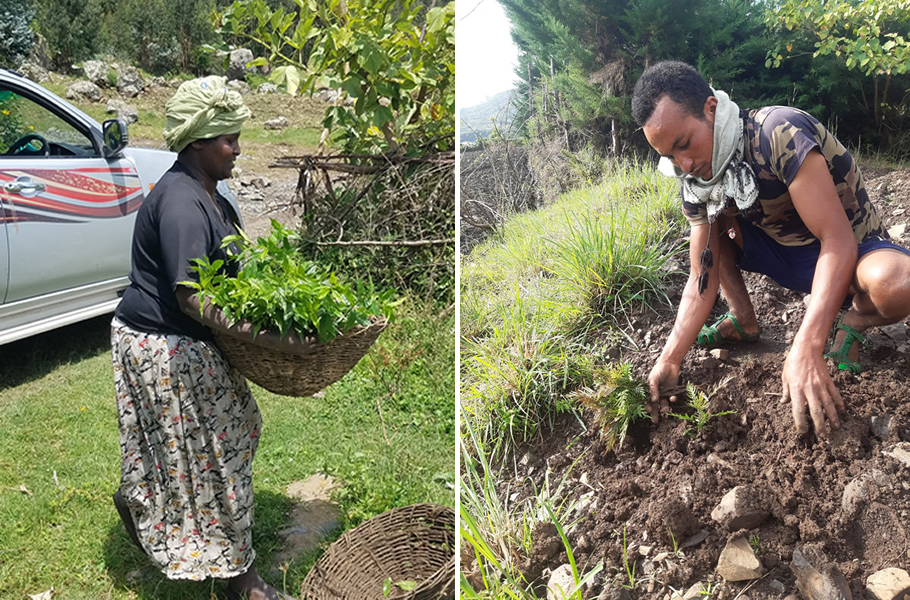
Left: A beneficiary receives Rhamnus prinoides seedlings to restore degraded lands. Right: A community member plants Grevillea robusta - multi-purpose tree species promoted by SUNARMA to strengthen ecosystem resilience and support sustainable agroforestry in Metema.
The results are already transforming landscapes and lives.
Environmental Impact: Forests on the Mend
Scientific monitoring from 2012 - 2023 shows that PFM has dramatically slowed deforestation in Metema's dry forests:
- Conversion of dense forests to farmland dropped by up to 60%.
- Deforestation rates are 10% lower in PFM-managed areas compared to nearby open-access forests.
- Burned forest land has significantly decreased, thanks to community fire patrols and local by-laws.
Forests under PFM also show richer biodiversity, with up to 62% more woody plant species and four times higher densities of mature trees than unmanaged forests. High-value tree species such as Boswellia papyrifera and Pterocarpus lucens are thriving once again.
Livelihood Impact: Forests that Feed Families
Beyond ecological gains, PFM has become a lifeline for rural livelihoods. Member households now earn 9 - 25% of their annual income from frankincense and other NTFPs, providing a steady income stream during dry seasons. The model is pro-poor, enabling resource-limited families to benefit most from sustainable harvesting.
PFM has also diversified local economies. Through beekeeping, fuel-saving stove production, and collective NTFP marketing, families - especially women - are developing new skills and enterprises. These ventures reduce dependency on forest clearance while generating reliable household income.
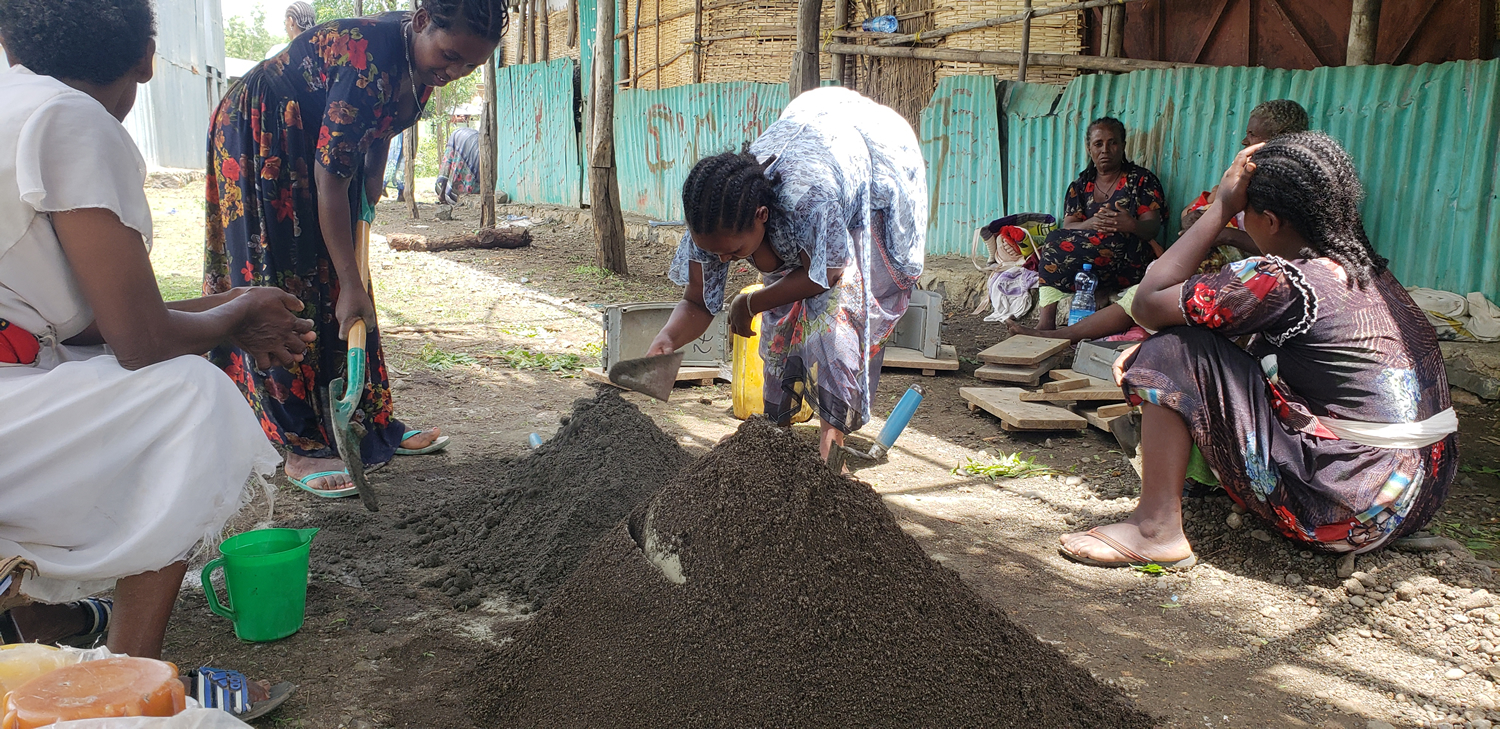
Women from a local producer group prepare materials for fuel-saving stoves in Metema village, Amhara Region. The initiative promotes alternative livelihoods that reduce pressure on dry forests while empowering women with new income-generating and climate-friendly skills.
Inclusion and Equity: Everyone Has a Stake
SUNARMA's PFM model emphasizes equitable participation. Women hold leadership roles within PFMCs and play active parts in decision-making. Alternative livelihoods tailored for women, such as improved stoves and honey production, are creating new income avenues while reducing forest pressure. Youth and persons with disabilities are also involved in forest product collection, processing, and cooperative management - ensuring no one is left behind in the forest economy.
Market Access and Value Addition
Through cooperative organization and training, PFMC members now collectively market NTFPs, gaining better prices and fairer trade terms. SUNARMA supports these cooperatives with: Market linkage facilitation, Technical skills training for value addition, and Promotion of underutilized NTFPs like wild fruits and medicinal plants. These efforts not only raise incomes but also increase the perceived value of standing forests, providing stronger incentives for conservation over conversion.
Lessons for the Future
The SUNARMA - Metema experience offers valuable lessons for sustainable natural resource management:
- Legal rights empower communities to take real ownership of forest resources.
- Livelihood support is key to conservation success - people protect what sustains them.
- Non-timber product-based PFM models reduce deforestation pressure while maintaining biodiversity.
- Collaboration between communities and government builds trust, social cohesion, and cost-effective conservation.
About SUNARMA
Sustainable Natural Resource Management Association (SUNARMA)founded in 2000 as a national NGO based in Ethiopia. SUNARMA dedicated to sustainable land use, forest management, and rural livelihood improvement. The organization partners with communities, local government, and international agencies to promote environmentally sound and economically viable natural resource use. SUNARMA is a member of the Nile Basin Discourse subscribing through the Ethiopia National Discourse Forum.
Share :

Related Stories
Key Resources
Author bio