TPL_YOOTHEME_SKIP_TO_MAIN_CONTENT
Coffee seedling distribution as one of the project’s core interventions, supporting climate-resilient livelihoods and strengthening household income through sustainable agricultural practices.

Building Resilient Futures: ERSHA Transforming Rural Livelihoods in Ethiopia

In Asagret, Ambo and Toke Kutaye districts of Amhara and Oromia Regions of Ethiopia Ethiopia, poor women, farmers and youth face persistent challenges of food insecurity, limited water access for agriculture, and climate-induced shocks that exacerbate poverty and reduce nutritional outcomes. Since January 2022, Enhanced Rural Self-Help Association (ERSHA) an Ethiopia Nile Discourse Forum (EthNDF) member has been implementing an Agro-ecology, Child-focused Development and Sustainable Food System project that is transforming lives through practical, sustainable interventions. - This is a story of resilience, women's empowerment, and climate-smart rural transformation

Since its establishment in 1997, ERSHA has been contributing to improved household income, poverty reduction, women empowerment, environmental protection, and the well-being of socially and economically excluded community groups in Ethiopia. They initiated a project in January 2022 aiming to enhance household income, reduce vulnerability, improve food security, and contribute to environmental restoration targeting 3,100 households (1,400 male-headed and 1,700 female-headed) across Amhara and Oromia Regions with integrated solutions that address both immediate needs and long-term resilience.

The Challenge: Overlapping Rural Vulnerabilities

Communities in the project areas were navigating compounded crises; unpredictable rainfall and prolonged dry spells, degraded soils and declining agricultural productivity, limited access to small-scale irrigation, dependence on single-crop farming systems, restricted economic opportunities for women and youth, and poor dietary diversity affecting children’s nutrition. These constraints reinforced cycles of vulnerability, leaving households exposed to climate shocks and market instability.

ERSHA’s Integrated, Multi-Pronged Approach

To break this cycle, ERSHA implemented a comprehensive package of interventions designed to diversify incomes, enhance food systems, and restore environmental health. The interventions include support for shoats (sheep and goats) on a revolving scheme, training on nutritious food preparation, provision of improved crop seeds, development of small-scale irrigation schemes, vermin composting training, vegetable seed distribution, agro-ecology-based environment protection, Enset (false banana) processing technology training, fruit tree plantation, and landscape greening initiatives.

By combining climate-smart agriculture, livelihood diversification, and nutrition-focused programming, the project addresses resilience at household, community, and ecosystem levels
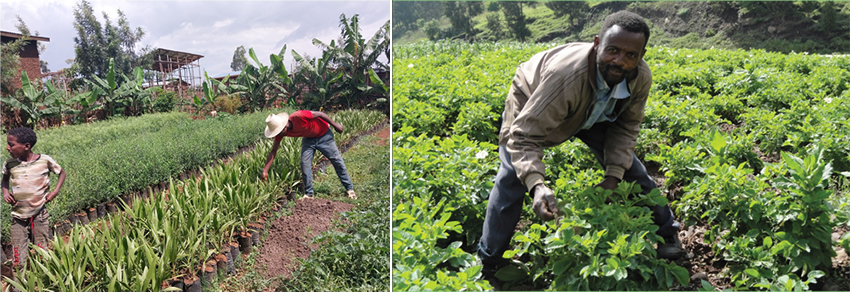
Youth driving sustainable livelihoods: tree seedling production (left) and irrigated potato farming (right)
Tree seedling production by Youths (left) and Potato production using irrigation farming (right)
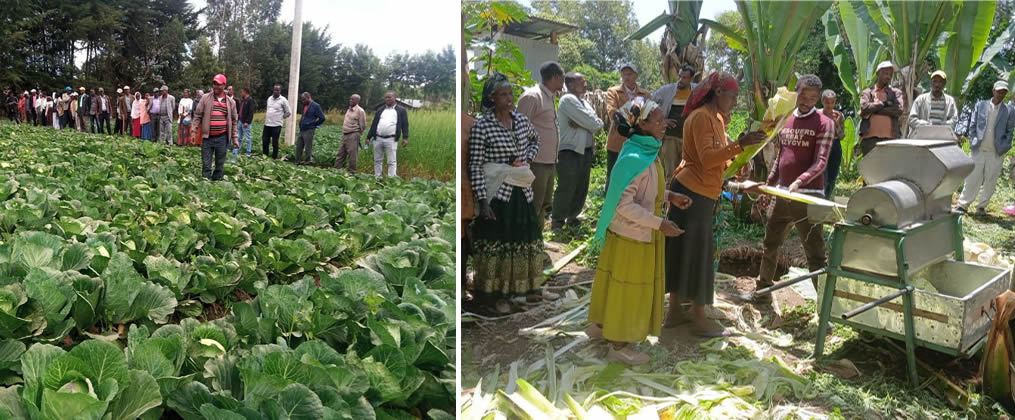
Vegetable production using vermicompost at Guder (left) and Enset food processing technology (right).

Tangible Results: Productivity, Inclusion, and Diversification

The outcomes speak for themselves. Agricultural productivity has improved significantly through irrigation and climate-smart practices, with beneficiaries reporting higher production in seasons where ERSHA supported small-scale irrigation interventions. Households have moved from dependence on single crops to diversified activities combining crops, small businesses, and livestock drastically reducing vulnerability to climate shocks. Farmer groups have been strengthened with improved market linkages, while women and youth now enjoy greater inclusion through economic participation and household decision-making over income. Households that once relied on rain-fed monocropping now operate diversified, climate-adaptive livelihood systems.

A Model That Multiplies: The Sheep Fattening Success Story

In 2024, ERSHA's sheep fattening initiative in Mutulu Kebele (Toke Kutaye Woreda) demonstrated the power of well-designed, women-centered interventions. Seven women received 14 sheep (two per woman) to start a fattening business. The timing was strategic; Ethiopia has over 13 public holidays annually when sheep are in high demand for celebratory slaughter, providing a reliable and profitable market.

Each woman fattened her sheep for one year while participating in training on animal husbandry, feeding, and small business management. They also contributed 100 ETB ($1 USD) per month to a group savings scheme totaling 1,200 ETB ($11 USD) annually per woman, or 16,800 ETB ($155 USD) collectively.

The numbers tell a remarkable story of sustainability. By year's end, each woman repaid an average of 12,000 ETB ($110 USD), bringing total repayment to 84,000 ETB ($778 USD). These funds purchased 14 additional sheep for a second group of beneficiaries in 2025. First-level beneficiaries not only repaid their loans but also reinvested in their own livestock by purchasing more sheep. In May 2026, a third group of women is set to receive sheep, continuing the revolving benefit system without requiring additional external resources.

The revolving structure ensures that impact compounds over time, transforming a single intervention into a self-sustaining enterprise model
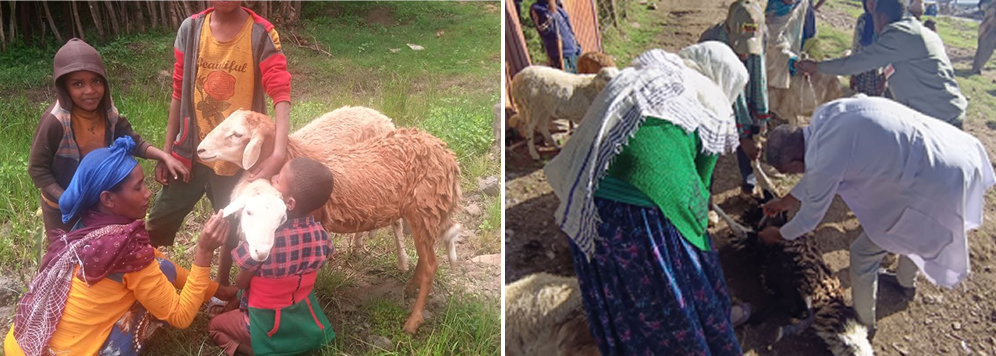
One of the beneficiary families with their sheep(left),Vaccination of sheep to avoid economic losses(right)

Key Lessons for Scaling Impact

The sheep fattening initiative illustrates a core development principle: when revolving capital, technical training, and market timing align, interventions evolve from short-term aid into scalable economic systems. Most importantly, women transitioned from beneficiaries to entrepreneurs, gaining practical skills, financial literacy, and economic agency.

Sustainable development emerges when communities are equipped not only with resources, but with the knowledge, structure, and ownership required to shape their own futures.


About ERSHA:

The Enhanced Rural Self-Help Association is a long-standing civil society organization in Ethiopia dedicated to poverty reduction, women’s empowerment, environmental protection, and inclusive rural development.

Members of a Participatory Forest Management Cooperative (PFMC) showcase graded frankincense at a trade fair in Metema, Amhara Region.

Empowering Communities, Restoring Forests: SUNARMA's Participatory Forest Management Success in Ethiopia

SUNARMA is restoring degraded dryland forests and transforming rural livelihoods in Ethiopia's Amhara Region. Through participatory forest management, SUNARMA empowers local communities in Metema Woreda to co-manage 37,833 hectares of forest, reduce deforestation, promote equitable benefit-sharing, and enhance household incomes from sustainable forest products; proving that conservation and livelihood improvement can go hand in hand..

Across Ethiopia's northwest lowlands, dry forests once teeming with life have been rapidly disappearing; cleared for agriculture, overgrazed by livestock, and scarred by uncontrolled fires. Yet in Metema Woreda, a remarkable turnaround is underway, led by the Sustainable Natural Resource Management Association (SUNARMA).

Founded in 2000, SUNARMA is one of Ethiopia's leading national NGOs championing sustainable natural resource management. Working hand in hand with rural communities, SUNARMA empowers forest-dependent households, pastoralists, women, youth, and people with disabilities to secure their livelihoods through sustainable practices.

Since December 2022, SUNARMA has been implementing a Participatory Forest Management (PFM) project across 37,833 hectares of dryland forest - directly benefiting over 3,000 households in Metema. The project is part of a growing national movement that seeks to make communities the rightful custodians of their forest resources.

The Challenge: Dry Forests Under Threat

The dry forests of Northwest Amhara - dominated by valuable species such as Boswellia papyrifera (the frankincense tree) - have faced severe degradation from agricultural expansion, illegal logging, overgrazing, and uncontrolled fires. With shrinking forest cover came declining biodiversity, soil erosion, and dwindling non-timber forest products (NTFPs) that thousands of rural families depend on for survival.

For many households, this translated into lost incomes, food insecurity, and increasing competition over shrinking resources. Traditional systems of forest protection had weakened, leaving communities vulnerable to both ecological and economic instability.

It was in this context that SUNARMA introduced a co-management approach - bringing local people back into the center of forest governance.

The Solution: Participatory Forest Management (PFM)

PFM empowers local communities to co-own, manage, and benefit from state forests through organized forest cooperatives (PFMCs). Members develop their own management plans, protect against encroachment and fires, and harvest forest products responsibly. SUNARMA's PFM approach in Metema combines ecological restoration with livelihood improvement, creating a powerful model of shared responsibility.

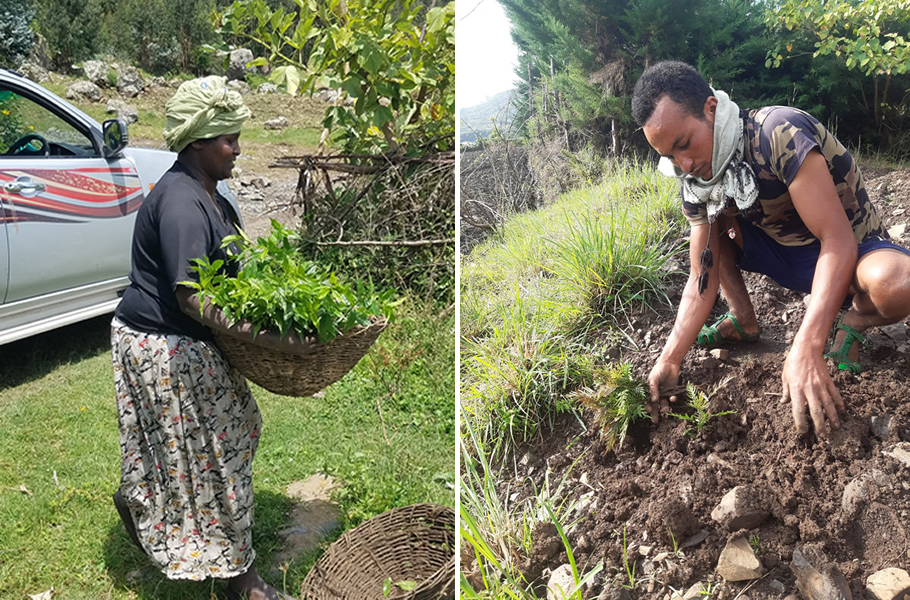
Left: A beneficiary receives Rhamnus prinoides seedlings to restore degraded lands. Right: A community member plants Grevillea robusta - multi-purpose tree species promoted by SUNARMA to strengthen ecosystem resilience and support sustainable agroforestry in Metema.

The results are already transforming landscapes and lives.

Environmental Impact: Forests on the Mend

Scientific monitoring from 2012 - 2023 shows that PFM has dramatically slowed deforestation in Metema's dry forests:

  • Conversion of dense forests to farmland dropped by up to 60%.
  • Deforestation rates are 10% lower in PFM-managed areas compared to nearby open-access forests.
  • Burned forest land has significantly decreased, thanks to community fire patrols and local by-laws.

Forests under PFM also show richer biodiversity, with up to 62% more woody plant species and four times higher densities of mature trees than unmanaged forests. High-value tree species such as Boswellia papyrifera and Pterocarpus lucens are thriving once again.

Livelihood Impact: Forests that Feed Families

Beyond ecological gains, PFM has become a lifeline for rural livelihoods. Member households now earn 9 - 25% of their annual income from frankincense and other NTFPs, providing a steady income stream during dry seasons. The model is pro-poor, enabling resource-limited families to benefit most from sustainable harvesting.

PFM has also diversified local economies. Through beekeeping, fuel-saving stove production, and collective NTFP marketing, families - especially women - are developing new skills and enterprises. These ventures reduce dependency on forest clearance while generating reliable household income.

Women from a local producer group prepare materials for fuel-saving stoves in Metema village, Amhara Region. The initiative promotes alternative livelihoods that reduce pressure on dry forests while empowering women with new income-generating and climate-friendly skills
Women from a local producer group prepare materials for fuel-saving stoves in Metema village, Amhara Region. The initiative promotes alternative livelihoods that reduce pressure on dry forests while empowering women with new income-generating and climate-friendly skills.

Inclusion and Equity: Everyone Has a Stake

SUNARMA's PFM model emphasizes equitable participation. Women hold leadership roles within PFMCs and play active parts in decision-making. Alternative livelihoods tailored for women, such as improved stoves and honey production, are creating new income avenues while reducing forest pressure.  Youth and persons with disabilities are also involved in forest product collection, processing, and cooperative management - ensuring no one is left behind in the forest economy.

Market Access and Value Addition

Through cooperative organization and training, PFMC members now collectively market NTFPs, gaining better prices and fairer trade terms. SUNARMA supports these cooperatives with: Market linkage facilitation, Technical skills training for value addition, and Promotion of underutilized NTFPs like wild fruits and medicinal plants.   These efforts not only raise incomes but also increase the perceived value of standing forests, providing stronger incentives for conservation over conversion.

Lessons for the Future

The SUNARMA - Metema experience offers valuable lessons for sustainable natural resource management:

  • Legal rights empower communities to take real ownership of forest resources.
  • Livelihood support is key to conservation success - people protect what sustains them.
  • Non-timber product-based PFM models reduce deforestation pressure while maintaining biodiversity.
  • Collaboration between communities and government builds trust, social cohesion, and cost-effective conservation.
SUNARMA's work in Ethiopia exemplifies how community-led conservation aligns with the NBD vision - strengthening water and ecosystem security through local empowerment. The approach not only safeguards Ethiopia's dry forests but also contributes to regional resilience and shared environmental stewardship across the Nile Basin.


About SUNARMA

Sustainable Natural Resource Management Association (SUNARMA)founded in 2000 as a national NGO based in Ethiopia. SUNARMA dedicated to sustainable land use, forest management, and rural livelihood improvement. The organization partners with communities, local government, and international agencies to promote environmentally sound and economically viable natural resource use. SUNARMA is a member of the Nile Basin Discourse subscribing through the Ethiopia National Discourse Forum.

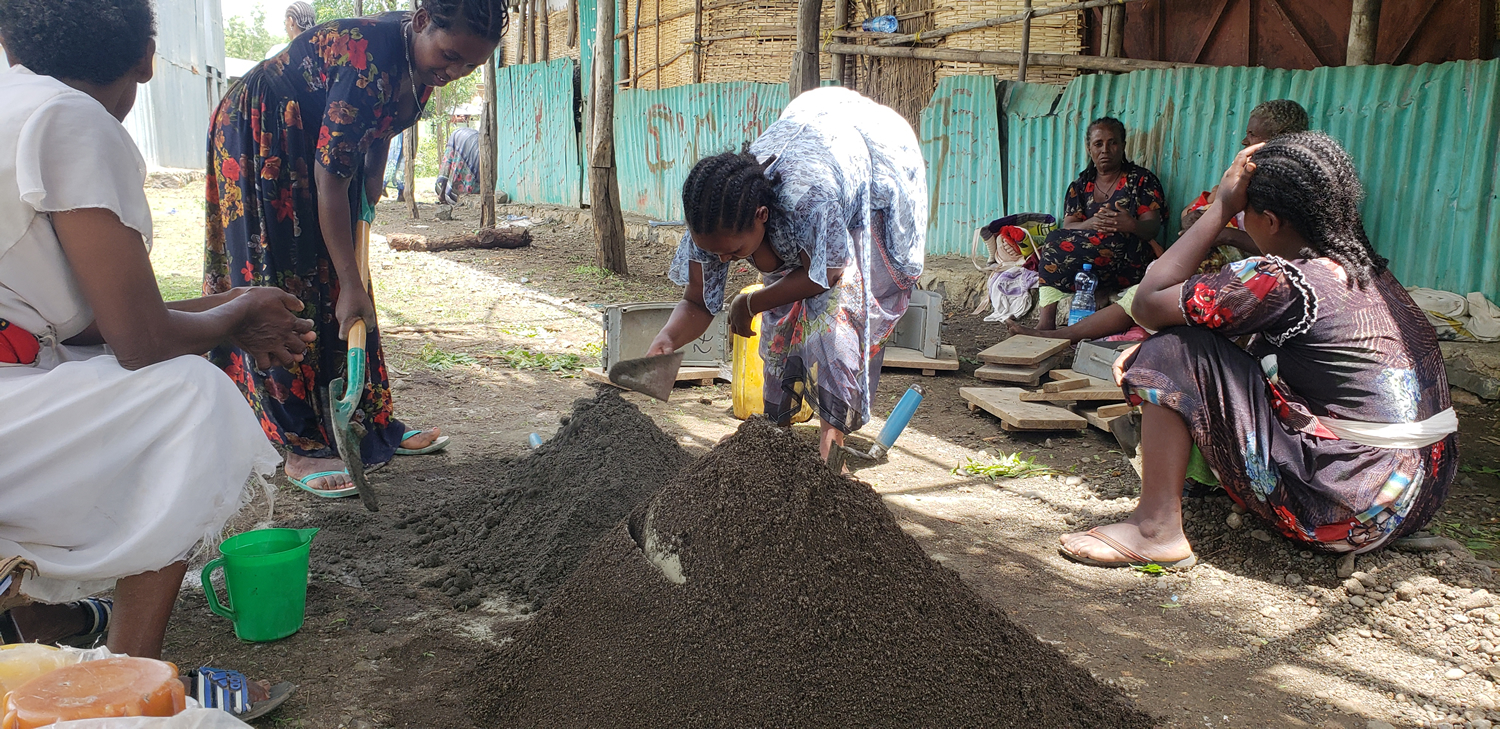
Local community members sorting Grass in preparation for planting during an Eco-system conservation activity at Shiatsala center, in Kakamega county (Photo credit: Zablon Indakwa)

Restoring Hope Through Nature: How Grassroots Action Is Reviving Wetlands and Strengthening Livelihoods in Western Kenya

From the lush fields of Nyando to the riverbanks of Butere and the wetlands of Nyatike, communities across Western Kenya's Nile Basin are taking action to heal the environment. Faced with deforestation, pollution, and unpredictable climate patterns, they are turning to nature-based solutions to restore degraded ecosystems and strengthen livelihoods.

In September 2025, the Kenya Nile Discourse Forum (KNDF), in collaboration with the Community Empowerment and Media Initiative in Kisumu (CEMI-K) and Eshinamanyuli Community-Based Organization (CBO), documented inspiring efforts by local residents to manage wetlands sustainably. These initiatives are not only restoring the environment but also rebuilding food security, livelihoods, and community resilience.

Transforming Swamps into Sustainable Farms

In Kakmie community of Nyando Sub-basin, residents have turned once-degraded swamps into productive agricultural zones. Crops like arrowroots, sweet potatoes, and vegetables now thrive, improving both nutrition and household income.

Local farmer Lorine Ouma shared: "Our swamp now provides clean water and a place where we can farm arrowroots, sweet potatoes, and vegetables. We do land use activities that are resilient to climate change for the purpose of improving people's livelihoods."

With technical and training support from CEMI-K, this initiative demonstrates how nature-based solutions can simultaneously enhance food security, restore wetlands, and build resilience against climate shocks.

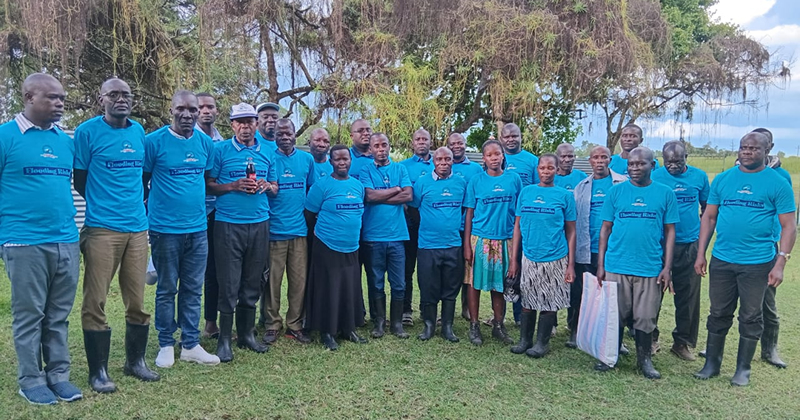
Angugo community members of Nyatike sub-county in a group photo after training on Flood RiskCommunication and Nature conservation

Reclaiming Riverbanks, Rebuilding Ecosystems
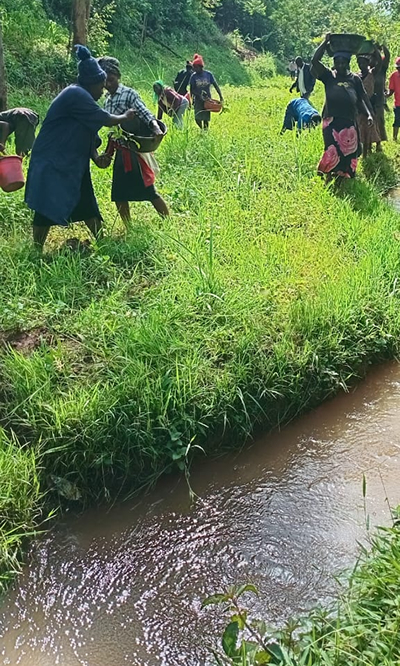
Planting assorted indigenious tress along river Firatsi in Butere of Kakamega county (Photo credit: Zablon Indakwa).
Planting assorted indigenious tress along river Firatsi in Butere of Kakamega county.

Along River Firatsi in Butere Sub-county, communities led by Eshinamanyuli CBO are reforesting riverbanks and promoting agroforestry. These actions have reduced soil erosion, improved soil fertility, and increased tree cover.

Community member Zablon Indakwa explained:
"Our tree planting efforts have reduced erosion and scaled up agroforestry, deforestation control, and landscape restoration activities."


These initiatives show that with collective action and local leadership, environmental restoration can go hand in hand with improved livelihoods.

Spreading Awareness and Mobilizing Communities

Beyond fieldwork, CEMI-K has amplified conservation efforts through radio talk shows, digital outreach, and training workshops promoting climate-smart agriculture and wetland protection. Information is shared through Facebook, WhatsApp, and community forums, ensuring even remote villages can access environmental education.

Meanwhile, Eshinamanyuli CBO continues to mobilize youth and women's groups to lead restoration, monitor biodiversity, and engage decision-makers in advocating sustainable land use. By blending traditional knowledge with digital tools, these grassroots movements are nurturing a new culture of environmental stewardship.

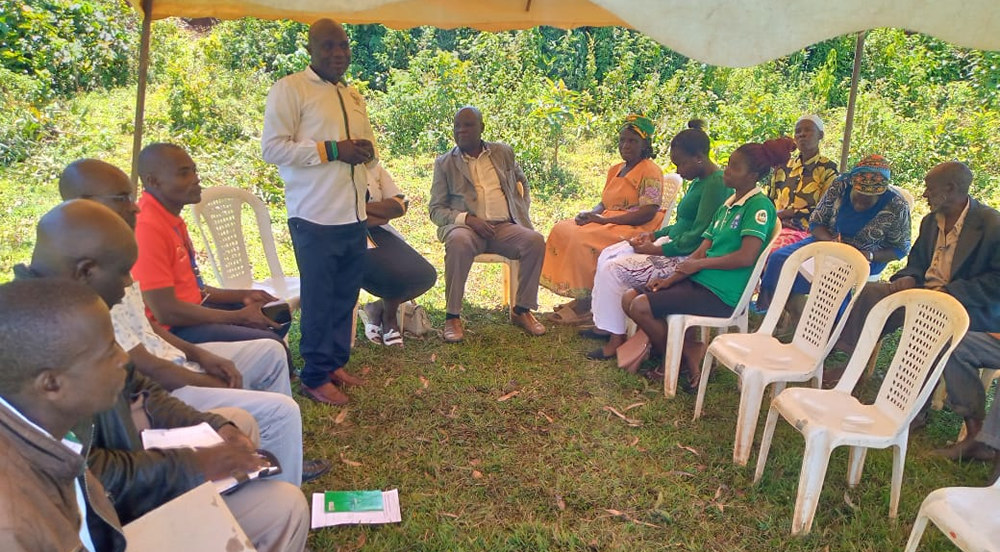
EYCBO members  during signing of voluntary wetland protection and conservation agreement with farmers whose land boarder river Firatsi in Butere sub-county, of Kakamega county.
EYCBO members during signing of voluntary wetland protection and conservation agreement with farmers whose land boarder river Firatsi in Butere sub-county, of Kakamega county.

Challenges on the Path to Sustainability

Despite these achievements, several obstacles persist. Communities face:

  • Environmental pressures such as deforestation, pollution, and erratic rainfall
  • Socio-economic constraints like poverty, limited resources, and insecure land tenure
  • Governance gaps including weak enforcement, fragmented policies, and poor coordination among stakeholders

These challenges limit the scalability of nature-based solutions, yet the determination of local actors continues to drive progress.

A Hopeful Future for the Nile Basin

The success stories from Kakmie, Firatsi, and Angugo show that nature-based solutions work not just for the environment but for people's lives. Restoring wetlands has brought cleaner water, better harvests, and renewed hope.

However, lasting impact will require stronger policy alignment, sustained funding, and inclusive, community-led planning. Expanding awareness through local media and digital platforms will be key to scaling success.

By combining indigenous wisdom with modern conservation techniques, communities in Western Kenya's Nile Basin are proving that when people and nature thrive together, resilience follows. Their story is one of hope, restoration, and the power of collective action.