TPL_YOOTHEME_SKIP_TO_MAIN_CONTENT
Internship Programme Activity Debrief, December 2025

Internship Programme Activity Debrief, December 2025

Report Summary:

In December 2025, interns conducted field visits, community dialogues, stakeholder engagements, and awareness campaigns aimed at generating grassroots evidence on climate vulnerability while strengthening civil society participation in transboundary water governance. These activities provided practical insights into local environmental challenges and amplified community voices across diverse national contexts.

Across the region, country-level engagements highlighted a wide range of climate-related issues and responses. Activities included assessments of plastic waste recycling in Burundi, farmer-focused climate awareness in the Democratic Republic of Congo, and documentation of water salinity impacts in Egypt. Other efforts ranged from stakeholder dialogues and infrastructure assessments in Ethiopia to community data collection on drought resilience in Kenya, policy engagement in Rwanda, heatwave awareness in South Sudan, and flood impact documentation in Tanzania. Together, these initiatives showcased both the diversity of climate risks and the localized strategies communities employ to adapt.

Overall, the findings reveal interconnected climate challenges—including flooding, drought, extreme heat, pollution, and water quality degradation—that disproportionately affect vulnerable groups such as women and youth. While communities continue to rely on indigenous knowledge and adaptive practices, there remains a clear gap in institutional support and resources to sustain these efforts. The internship programme has significantly contributed to citizen-led data generation and strengthened collaboration between NBD, NDFs, and grassroots actors, laying a solid foundation for deeper engagement and long-term climate resilience across the Nile Basin.

Reports

Internship Programme Activity Debrief, November 2025

Internship Programme Activity Debrief, November 2025

Report Summary:

This report captures the initial phase of the NBD Internship program under the Nile Civil Society for Climate Resilience (NCSCR) Project in November 2025 across selected Nile Basin countries. The first cohort of seven interns drawn from Burundi, the Democratic Republic of Congo, Ethiopia, Kenya, Rwanda, South Sudan, and Tanzania, were deployed through their respective National Discourse Forums (NDFs). Activities focused on reinforcing civil society engagement, promoting community-level participation, and documenting locally driven approaches to climate adaptation and water resource management.

Throughout the month, interns engaged in a mix of institutional and field-based activities, including coordination with NDFs, participation in board meetings, stakeholder consultations, and targeted capacity-building sessions. Notable engagements included contributions to governance meetings, collaboration with NBD member organizations, and extensive grassroots community consultations. These efforts were complemented by networking and training opportunities, enabling interns to strengthen partnerships while deepening their understanding of regional climate and water governance dynamics.

Findings from Intern's field studies underscored persistent challenges related to water access, climate variability, and resource constraints, alongside strong evidence of community resilience. A significant proportion of respondents reported inadequate water supply, pointing to critical gaps in availability and quality. Meanwhile, communities across the region demonstrated adaptive capacity through practices such as rainwater harvesting, climate-smart agriculture, kitchen gardening, and sustainable land management. Despite operational constraints, the internship programme successfully enhanced coordination among stakeholders, generated valuable grassroots data, and strengthened the visibility and impact of NBD’s work in advancing climate resilience across the Nile Basin.
Reports

Students of Nyenkarange Blue School hold tree seedlings for planting, following sensitisation on natural resource conservation and biodiversity management - marking a practical step toward youth-led environmental stewardship.

Growing Green Minds: How Blue Schools Are Shaping Burundi’s Next Generation of Environmental Champions

In Burundi’s Nyenkarange hills, Blue Schools are turning students into leaders of environmental change. With support from NBD's Burundi National Discourse Forum (BNDF), young people are learning to protect biodiversity, improve hygiene, and manage natural resources sustainably. The initiative shows how empowering youth can transform schools, communities, and the future.

"The students didn't know how to contribute to managing natural resources. They didn't understand the importance of trees or cleanliness in their environment", recalls a teacher from Nyenkarange School, describing the situation before the BNDF intervened. In the hills of Nyenkarange, Mpanda commune, what was once a community facing deforestation and environmental neglect has transformed into a model of youth-led conservation.

Before BNDF's intervention, the 913 students at Nyenkarange I and II Fundamental Schools had minimal understanding of biodiversity, natural resource management, or environmental legislation. Trees were cut without replanting, school sanitation was poor, and deforestation advanced rapidly. Operating on the principle that "he who educates the youth prepares a better future", BNDF partnered with a local association Dufashanye Dufashanye Barundi and Duteribiti to launch a biodiversity preservation project.

From July 30-31, 2025, BNDF conducted intensive training for 30 students (16 boys and 14 girls) from environmental club, accompanied by four teachers. The training covered natural resource management, biodiversity preservation, hygiene and sanitation including the Blue School concept, Burundi's environmental codes, animal stabilization, and fruit tree maintenance. On October 27, 2025, BNDF provided essential tools including hoes, pickaxes, machetes/pangas, watering cans, scrapers, and dignity kits for girls to integrate ecological actions into daily school life.

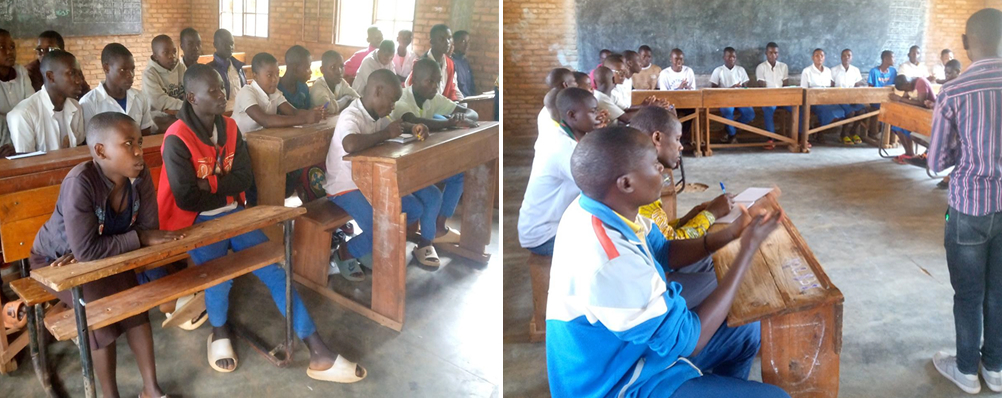
Students participate in a training session on natural resource and biodiversity management, school hygiene and sanitation, and the Blue School approach (left), alongside members of the school environmental clubs following a sensitisation session on natural resource and biodiversity management (right).
Students participate in a training session on natural resource and biodiversity management, school hygiene and sanitation, and the Blue School approach (left); members of the school environmental clubs following a sensitisation session on natural resource and biodiversity management (right).

The school headteacher enthusiastically appreciated: "Thanks to this training supported by BNDF, our school is becoming a true Blue School. The fruit and agroforestry trees we planted will provide shade for studying, improve hygiene, and feed our students. The fruits sold will help finance school needs."

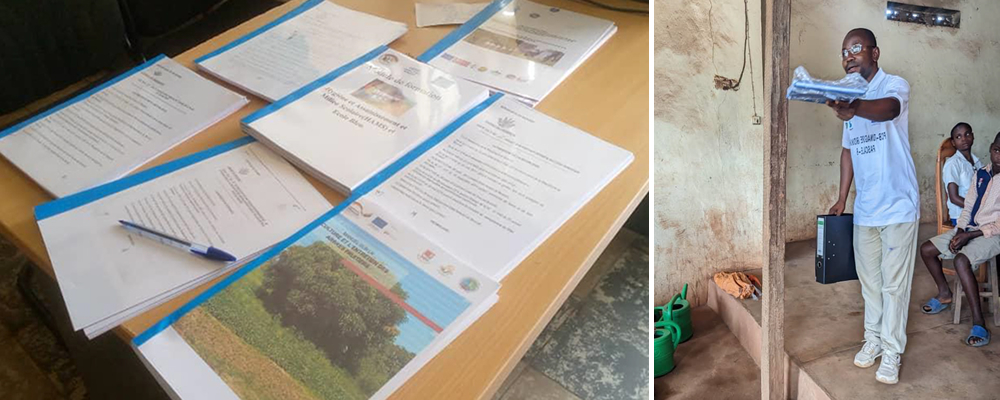
Guides distributed by BNDF to members of school environmental clubs (left), alongside the distribution of learning materials and dignity kits to girls during the outreach activity (right).
Guides distributed by BNDF to the school's environmental club (left), alongside the distribution of learning materials and dignity kits to girls during the outreach (right).

The impact has rippled beyond school walls. One mother shared, "After the training, our children remind us about the importance of cleanliness and encourage us to restore natural resources."

Looking Ahead

While funding constraints limited training to only 30 of the 913 enrolled students, BNDF hopes to extend and scale up this initiative to other schools. "With more funding, we could reach other schools and further strengthen local capacities," said the BNDF coordinator. By placing youth at the heart of environmental protection, BNDF has planted seeds for a greener future.

Today, these students are not only learners but also ambassadors of nature, proving that when youth take action, nature breathes and the future brightens.

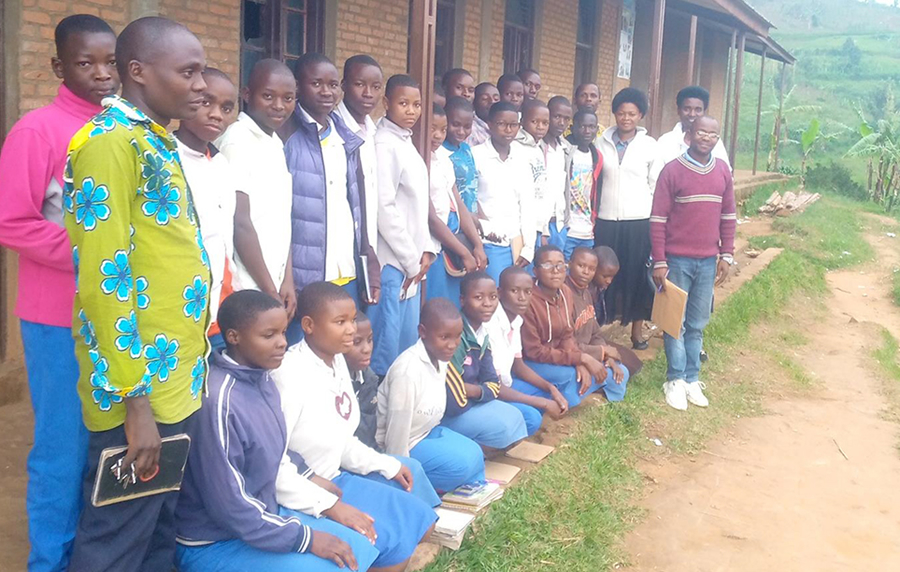
Group photo of members of school environmental club following a sensitisation session on natural resource conservation and biodiversity management.
Group photo of  the school environmental club members following the raining on natural resource conservation and biodiversity management.