A Drop of Hope: Easing a Mother’s Daily Struggle for Family Survival in Water-Scarce Juba
Published: 05 February 2026
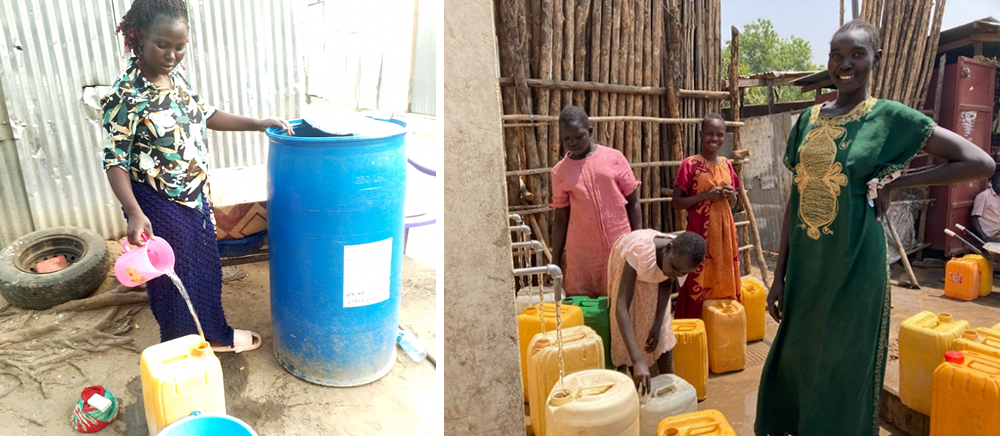
Aciro draws water from the storage drum she previously relied on (left), while a woman and girls fetch water from a community-managed water point established under the Safe Water Initiative, now serving more than 300 families in Juba (right)
In Juba, where only 30% of residents have reliable access to clean water, Achiro Concy’s daily struggle to secure water for her family reflects a deepening crisis intensified by extreme heat and rising costs. Her life took a positive turn when community-led initiatives, supported by Nile Basin Discourse Forum, JICA, and the Ministry of Water Resources and Irrigation, introduced sustainable water solutions. Today, her story stands as a powerful example of how community-driven approaches can transform lives, improve health outcomes, and build resilience in water-stressed regions.
In the scorching heat of Juba, where reliable access to clean water remains out of reach for many, daily life can become a relentless struggle. For Achiro Concy, a 28-year-old mother of three living in Luri, securing water for her family once meant long, exhausting journeys under the sun and difficult choices between cost, safety, and survival.
With only about 30% of residents able to access safe and reliable water, most households depend on private water vendors who deliver untreated or poorly treated water by truck. For Achiro, this water was not only expensive but often unsafe posing constant health risks to her children. Each day, she stored the little she could afford in 100 to 150-liter drums, carefully rationing it for cooking, cleaning, and drinking, knowing it would rarely be enough.
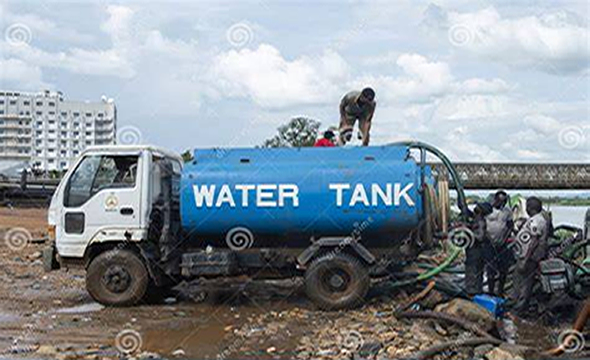
Water supplier truck drawing unsafe water from the River Nile. ©Dreamstime (http://www.dreamstime.com)
Achiro’s daily struggle for her family’s survival
Before change came, Achiro’s routine was defined by uncertainty. Water sources were inconsistent, streams had dried up due to prolonged heat, and the cost of water fluctuated unpredictably. Time spent searching for water meant less time caring for her children or pursuing income-generating activities. Like many women in her community, the burden of water collection fell squarely on her shoulders; physically draining and emotionally taxing, with direct consequences for her family’s well-being.
The Day Things Began to Change Through Community Action
Achiro’s life began to shift when she attended a community meeting organized by the Nile Basin Discourse Forum – South Sudan (NBDF-SS), focused on sustainable water solutions. The meeting brought together local leaders, government representatives from the Ministry of Water Resources and Irrigation, and development partners including JICA, Action for Children, and Women Organization (ACWO). What started as a discussion quickly became a catalyst for action. Motivated by the possibilities, Achiro joined a community committee dedicated to improving water access through locally driven solutions. Together, they implemented rainwater harvesting systems, installing rooftop collection structures and developing community water storage points. These efforts significantly reduced the time and effort required to access water.
The transformation in Achiro’s life was made possible through a collaborative approach. NBDF-SS played a central role in mobilizing the community and ensuring local voices shaped the solutions. JICA provided technical expertise and resources, while the Ministry of Water Resources and Irrigation ensured alignment with national priorities and sustainability frameworks. A key outcome of this collaboration was the establishment of a community-managed water tap point, an affordable and safer alternative to water sold by private truck vendors. This initiative directly benefited more than 300 families in Juba, improving both access and affordability of clean water. Local organizations like ACWO further strengthened the effort through community awareness and engagement, particularly around sanitation and safe water practices.
More Than Water - A New Beginning
With improved access to clean water, Achiro’s daily reality changed dramatically. No longer spending hours searching for water, she could dedicate more time to her children and invest in a small craft business to support her household. The health of her family also improved, reflecting a broader community trend - waterborne illnesses dropped by an estimated 40%, easing both emotional and financial strain. Beyond the practical benefits, something less visible but equally powerful emerged: confidence. Achiro found her voice within the community. She became an advocate for sustainable water practices, encouraging other women to participate in local decision-making and income-generating activities. What began as a personal struggle evolved into a shared movement of empowerment.
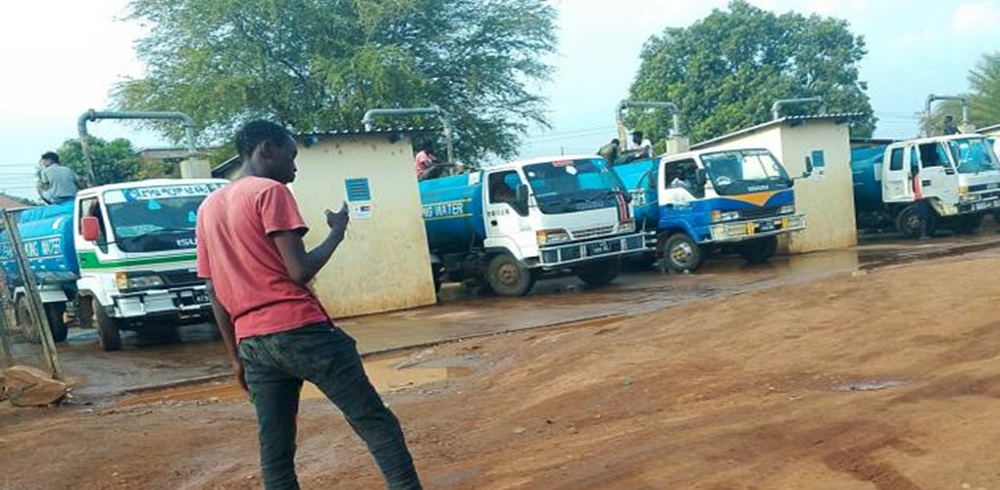
Water bowser trucks line up at a distribution point to fill treated water for supply
What Achiro’s Story Teaches Us on Resilience and Sustainability
Achiro’s story highlights a critical truth: sustainable solutions to water scarcity are most effective when they are community-led. By involving residents in the design, implementation, and management of water systems, these initiatives foster ownership, accountability, and long-term viability. Small contributions from community members toward maintenance further strengthen sustainability, ensuring that solutions endure beyond initial project support. In the face of increasing climate pressures, including prolonged heat waves and water shortages, such approaches offer a practical and scalable pathway toward resilience.
Keeping the Momentum Alive
While challenges remain, Achiro’s story demonstrates possibilities when communities are not just beneficiaries, but active partners in shaping solutions. Strengthening community ownership, expanding rainwater harvesting, investing in inclusive water infrastructure, and deepening collaboration between local actors and development partners will be essential to sustaining progress. For Achiro and many others in Juba, access to clean water is no longer just about survival, it is about dignity, opportunity, and hope for a better future.
Related Stories
Key Resources
Author bio